Growing a local service business feels harder than ever. You’re competing with larger firms, managing tight margins, and spending money on ads that may or may not convert. But there’s a faster, cheaper path most service owners overlook: referrals.
Referrals from satisfied customers are the lifeblood of sustainable local business growth. They cost less than paid advertising, convert at higher rates, and bring in clients who already trust you. Yet most service businesses leave referrals to chance—hoping customers will mention them to friends without any system in place.
This guide walks you through proven strategies to grow your local business through referral marketing, customer retention, and smart automation. Whether you run a trades business, cleaning service, consulting firm, or any other local service, these tactics will help you build a referral engine that drives predictable, profitable growth.
Why Referral Growth Matters for Your Local Service Business
Before diving into tactics, let’s establish why referrals are your fastest path to growth.
- Cost-effectiveness: Referrals typically cost 60–70% less per acquisition than paid advertising.
- Higher conversion rates: Referred prospects are 4x more likely to buy than cold leads.
- Better customer quality: Referrals tend to be better-fit clients who stay longer and spend more.
- Sustainable scaling: Unlike paid ads that stop working when you stop spending, referrals compound.
The challenge isn’t whether referrals work—they do. The challenge is systematizing them so they happen consistently, not by accident.
The Problem: Why Manual Referral Requests Fail
Most service business owners ask for referrals in ad-hoc ways: a passing mention at the end of a job, a referral card handed out randomly, a vague incentive that customers forget, and no follow-up or tracking. This approach generates a handful of referrals but is unreliable and leaves money on the table.
Why it fails:
- Timing is wrong. You ask for referrals when customers are distracted, tired, or thinking about the next thing.
- No incentive clarity. Customers don’t remember what reward they’ll get or how to refer someone.
- No system. Without tracking, you can’t see which customers refer most, which referral sources convert best, or how to improve the process.
- Inconsistency. Some team members ask; others don’t. Some customers get asked; others don’t.
- Friction. Making a referral requires effort. If the process isn’t simple, most customers won’t bother.
How to Build a Referral Growth System
1. Identify Your Ideal Referral Moment
The best time to ask for a referral is when your customer is most satisfied. This varies by business type:
- Trades and home services: Right after job completion, when the customer sees the finished result.
- Subscription or recurring services: After the first month or quarter of great results.
- Professional services: After delivering a successful outcome or milestone, or after they’ve paid an invoice.
- Beauty, fitness, or wellness: After a service they specifically loved, or after 30+ days as a customer.
2. Create a Clear, Attractive Referral Incentive
- Reward the referrer: “For every referral that books a job, you get £50 credit toward your next service.”
- Reward the referred friend: “Refer a friend and they get 20% off their first appointment.”
- Dual incentive (most effective): Both parties win. This removes guilt and makes sharing feel like you’re helping a friend.
3. Make Referring Frictionless
- Provide a referral link or code they can text or email to friends
- Send a ready-made message they can copy and share
- Offer a referral form they can fill out with a friend’s contact details
- Use SMS or email to send the referral request and tracking link
4. Automate the Request at the Right Moment
Instead of relying on memory or inconsistent team behavior, automate referral requests to trigger at optimal moments:
- After a job is marked complete
- After an invoice is paid
- After a positive review is left
- After a customer reaches a milestone (e.g., 3 months as a customer)
Automation ensures every happy customer gets asked, consistently and at the right time. Tools like nudgey automate referral requests via SMS, triggered by customer actions you define.
5. Track and Optimize
Track referral volume, referral conversion rates, referral source, and ROI. Use this data to refine your approach—test different incentives, timing, and channels.
Referral Growth Strategies for Specific Service Business Types
Trades and Home Services
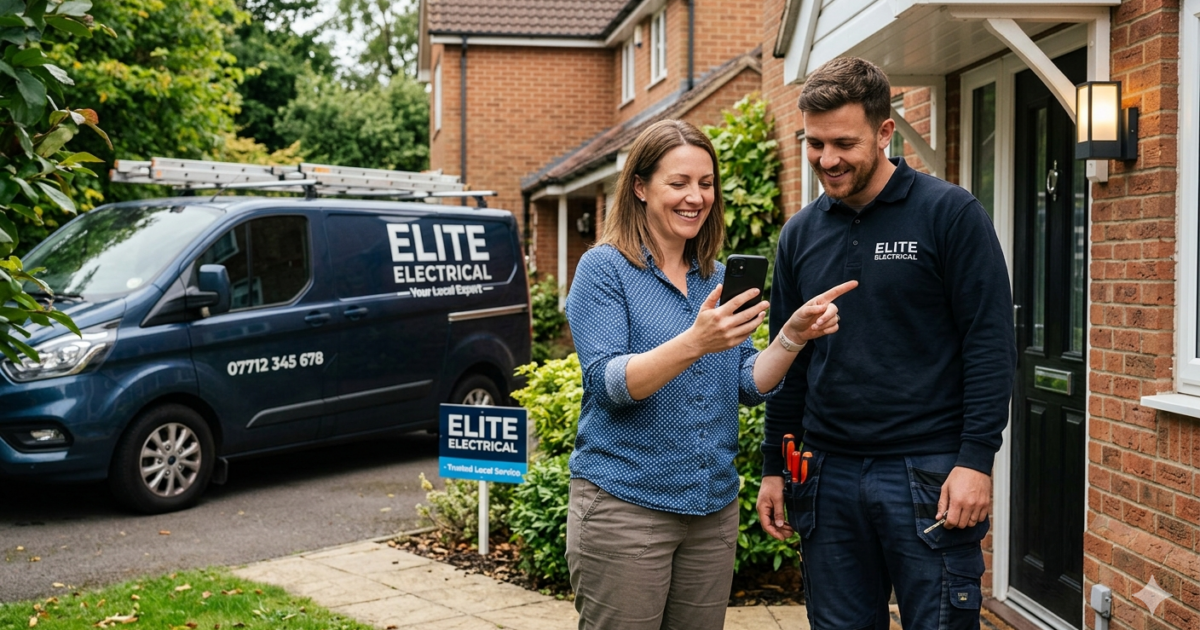
For plumbers, electricians, builders, and similar trades, the referral moment is crystal clear: job completion. Ask for referrals via SMS or email within 24 hours of job completion, offer a referral reward (e.g., £30–50 credit or discount), and include a referral link they can text to friends.
Cleaning and Maintenance Services
Send a referral request after the 3rd or 4th service (when they know you’re reliable). Offer a discount or credit for both the referrer and their friend.
Professional Services
Ask for referrals after project completion or milestone delivery. Consider invoice-paid referral SMS as a trigger, since payment signals satisfaction.
Beauty, Fitness, and Wellness
Ask for referrals after services customers specifically praise. Use after-service review referrals to capture enthusiasm when they’re leaving a positive review.
Building Customer Loyalty to Fuel Referrals
Referrals start with exceptional service. Ensure every customer experience is consistent, reliable, professional, and delivers real value. When customers experience this consistently, they want to refer you.
Implementing Your Referral Growth Plan
- Define your referral moment
- Design your incentive
- Create your referral assets (message template, link, form)
- Set up automation
- Launch and communicate to existing customers
- Track and optimize after 30 days
Common Mistakes to Avoid
- Asking at the wrong time
- Unclear incentive
- Making it hard to refer
- Not following up
- Ignoring data
- Forgetting to say thank you
Understanding Your Referral ROI
Most service businesses see 300–500% ROI on referral programs within 6 months. Calculate: ROI = (Revenue – Cost) / Cost × 100. Compare total rewards paid against new customer lifetime value from referrals.
Next Steps: Start Growing Your Local Business Today
Growing a local service business requires: exceptional service, a clear referral moment, an attractive incentive, a simple process, and consistent execution through automation. Start with one referral moment and one incentive. Measure the results. Optimize based on data. Scale what works.
Frequently Asked Questions
What is the fastest way to grow a local service business?
Referrals from satisfied customers are the fastest and most cost-effective growth channel. Focus on delivering exceptional service, then systematically ask for referrals at the right moment—when customers are most likely to say yes, such as after payment or a positive review.
How can I get more referrals without spending on advertising?
Build a referral program that rewards customers for introductions, make asking for referrals part of your service process, and use automation to request referrals at optimal times. Many service businesses find referrals generate 40–60% of new clients at zero ad spend.
What metrics should I track to measure local business growth?
Monitor customer acquisition cost (CAC), customer lifetime value (LTV), referral conversion rate, repeat customer rate, and revenue per customer. Compare these before and after implementing a referral strategy.
How long does it take to see results from a referral strategy?
Most service businesses see their first referral-generated leads within 2–4 weeks of launching a referral program. Momentum builds over 3–6 months as more customers refer and your referral network compounds.