You’re running a solid service business. Your clients love you. But growth feels stuck.
You’ve tried Google ads. You’ve posted on social media. You’ve networked until your face hurts. Yet the phone isn’t ringing the way it used to.
Here’s what most local service business owners miss: your best source of new business is already sitting in your client list.
Referrals aren’t a nice-to-have. They’re the fastest, cheapest, and most reliable way to grow. And unlike paid advertising, referral clients come pre-sold, stay longer, and spend more.
This guide shows you exactly how to build a referral engine that works—without being pushy or relying on luck.
Why Referrals Are Your Fastest Growth Path
Research shows that referred customers have a 25% higher retention rate and generate 16% more lifetime value than non-referred customers. For service businesses, this matters even more:
- Trust is already there. Your client’s mate doesn’t need convincing that you’re legitimate.
- No sales friction. Referred prospects expect to work with you.
- Better fit clients. People refer others like themselves.
- Lower cost per acquisition. You’re not paying for ads, landing pages, or long sales cycles.
The Three Reasons Your Referrals Have Stalled
1. You Haven’t Made It Easy
You expect clients to remember you when they meet someone who needs your service. But life is busy. They forget. Or they don’t know how to refer you properly. “Hey, I know a great plumber” is nice. But a referral that includes specific contact details and context is one that converts.
2. You Don’t Ask at the Right Moment
Timing is everything. Ask for a referral when your client is frustrated? They won’t help. Ask when they’re thrilled? You’ve got a champion. Most businesses never ask at all, or they ask once at the end of a project when momentum has faded.
3. You Haven’t Built a System
One-off referrals feel good but don’t scale. You need a repeatable process that identifies your best referral sources, makes asking natural and easy, tracks who’s referred business, and rewards your advocates.
The Five-Step Referral Growth System
Step 1: Identify Your Ideal Referral Source
Start by asking yourself: Who are your best clients? What do they do? Who do they know? Who would they naturally refer? Write down your top 5–10 ideal referral sources and be specific.
Step 2: Ask at the Peak of Satisfaction
The best time to ask is right after you’ve delivered results. The ask should be simple and natural: “I’m so glad that’s sorted for you. We love working with people like you. Do you know anyone else in your network who’s dealing with [specific problem]?”
Step 3: Make Referring You Effortless
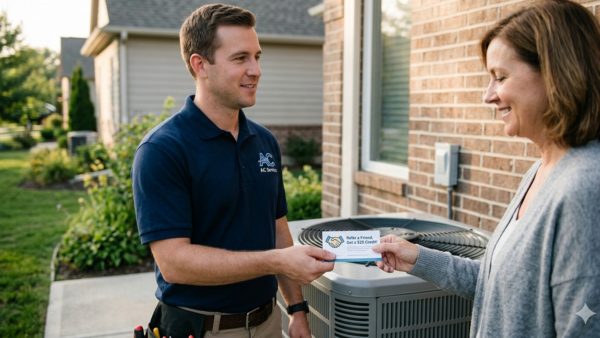
Create a referral card or one-pager with your name, what you do in plain English, your phone number and email, and a line like “Tell them [Client Name] sent you.” Send a follow-up message after your conversation with your contact info and a referral link if you want to track sources.
Step 4: Track and Acknowledge Referrals
Log every referral. Close the loop—tell your referral source when their recommendation worked. Say thank you every time, whether it’s a message, a small gift, or a discount on their next service.
Step 5: Reward Your Best Advocates
Options include referral bonuses ($50–$200 per referred client), exclusive perks (priority scheduling, discounts), public recognition, or reciprocal referrals if they’re also a service business.
Common Mistakes That Kill Referral Growth
- Asking Everyone the Same Way: Tailor your ask to the person and their network.
- Only Asking Once: Build referral asks into multiple touchpoints.
- Not Following Up on Referrals: Always tell your referral source what happened. Always say thanks.
- Treating Referrals Like One-Time Events: Referrals are a system, not a campaign.
How to Scale Your Referral System
Build a Referral Partner Program
Identify 10–20 people who refer you regularly. Invite them into a formal program with clear referral rewards, marketing materials they can share, regular communication, and exclusive benefits.
Create Referral Incentives That Work
Test different approaches: cash bonuses ($50–$500), service discounts (20% off next project), gift cards, charitable donations, or charitable donations in their name. Track which incentives generate the most referrals.
Use Technology to Automate the Process
As you grow, manual tracking becomes messy. Consider tools that capture referrals automatically when clients mention them, send thank-you messages without manual typing, track referral ROI, and manage referral rewards.
Real-World Example: How a Local Service Business Grew 40% Through Referrals
James, a landscape designer in Brisbane, was steady but stuck. Most of his work came from Google ads, which were getting expensive. He built a referral system:
- Identified his best clients: property developers, real estate agents, and interior designers.
- Asked at the right time after completing projects.
- Made it easy with referral cards and follow-up messages.
- Tracked everything in a simple spreadsheet.
- Rewarded advocates with $200 per referred client who signed a contract.
Within six months: 35% of new business came from referrals, cost per acquisition dropped by 60%, referred clients had 40% higher project values, and he reduced his ad spend by half.
Building Your Referral System This Month
- Week 1: Identify — List your top 10 clients and who they know.
- Week 2: Ask — Reach out to three of them with a simple, specific ask.
- Week 3: Make It Easy — Create a referral card or one-pager.
- Week 4: Track and Thank — When a referral comes in, log it and say thank you.
Frequently Asked Questions
Why are referrals better than paid advertising for growing a service business?
Referred customers come pre-sold with trust already established. They have a 25% higher retention rate and generate 16% more lifetime value than non-referred customers. Unlike paid ads, referrals eliminate sales friction and cost significantly less per acquisition.
What’s the biggest mistake service businesses make with referrals?
Most service businesses leave referrals to chance instead of building a system around them. They expect clients to remember and refer without making it easy, asking at the right moment, or creating a repeatable process.
When is the best time to ask clients for referrals?
Ask when your client is thrilled with your work—right after you’ve delivered exceptional results or solved a major problem. Avoid asking when they’re frustrated or unhappy.
How can I make it easier for clients to refer me?
Remove the friction by giving clients specific language and a clear process. Provide them with your contact details, a simple referral script, or a direct way to introduce you to their network.