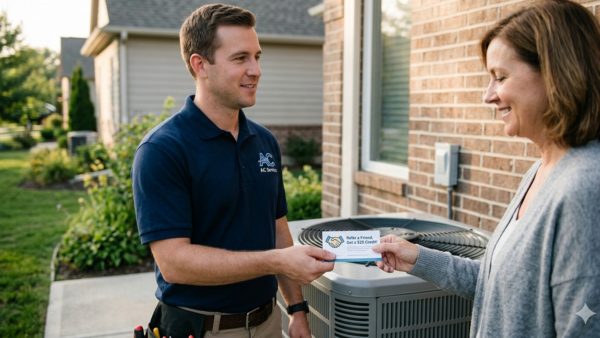
You already know your best customers are your best marketers. They’ve experienced your service firsthand. They trust you. And when they recommend you to a friend, that recommendation carries weight no amount of paid advertising can match.
But here’s the problem: most service business owners never ask for referrals systematically. And even when they do, following up with customers, tracking who said they’d refer someone, and managing the entire process becomes a manual nightmare.
That’s where referral automation software comes in.
In this guide, we’ll walk you through what referral automation actually is, why it matters for your bottom line, and how to choose the right solution for your service business.
What Is Referral Automation Software?
Referral automation software is a tool that systematises the process of asking customers for referrals, tracking referral sources, and rewarding advocates—without you having to manually chase people up.
Instead of remembering to email a customer three months after they’ve paid an invoice, your software does it automatically. Instead of manually logging who referred whom, your system tracks it. Instead of manually calculating referral rewards, your platform handles it.
The result? More referrals, less admin, and a predictable source of new customer growth.
Why Referrals Matter More Than Ever
Referred customers have a 25% higher retention rate and spend 16% more than non-referred customers. For service businesses, this is massive. You’re not just getting more customers—you’re getting better customers. Referrals don’t happen by accident. They happen when you make it easy for customers to refer you, and when you acknowledge and reward that behaviour.
The Problem With Manual Referral Management
Manually managing referrals means:
- Remembering to ask: You finish a great project, but by the time you think to ask for a referral, weeks have passed and the moment’s gone.
- Tracking who said what: Customer A mentioned they’d refer you, but did they? Did you follow up? You’re not sure.
- Manual follow-ups: You need to send reminder emails, track responses, and chase people up—all by hand.
- Calculating rewards: If you’re offering referral incentives, you’re manually tracking who referred whom and calculating payouts.
- Lost opportunities: Without a system, referrals slip through the cracks entirely.
How Referral Automation Software Works
1. Asks Customers at the Right Time
Your software sends referral requests at the moment customers are most likely to say yes—usually right after they’ve had a great experience. Triggers can include project completion, invoice payment, service milestones, positive survey responses, or time-based triggers.
2. Makes It Easy to Refer
Once a customer agrees to refer you, the software gives them a simple way to do it: share a unique referral link, forward a pre-written email, fill out a simple form, or share a referral code. The lower the friction, the more referrals you’ll get.
3. Tracks and Rewards Referrals
Your software automatically tracks who referred whom, whether the referred customer converted, the value of each referral, and rewards owed. You can then automate reward payouts—whether that’s a discount, a cash bonus, or store credit.
Why Service Businesses Need Referral Automation
High Customer Lifetime Value
If you’re a plumber, electrician, accountant, or marketing consultant, your customers typically stay with you for years. Each referral can be worth thousands of dollars in lifetime revenue. A manual referral system might generate a few referrals per year. Automated referral software can generate dozens.
Relationship-Based Business Model
Service businesses are built on trust and relationships. Your customers already like you. They just need a gentle nudge and an easy way to refer their friends and colleagues.
Predictable Growth
Unlike paid advertising, which stops working the moment you stop paying, referral growth compounds. Each customer you acquire through a referral becomes a potential source of future referrals. Automation makes this process predictable and scalable.
Key Features to Look for in Referral Automation Software
- Easy Integration: Works with your existing CRM, invoicing system, email platform, and payment processor.
- Customisable Referral Requests: Custom messages, timing controls, reward rules per customer segment, and branded experience.
- Transparent Tracking: See sends, clicks, conversions, and ROI.
- Flexible Reward Options: Cash bonuses, discounts, store credit, exclusive perks, or charitable donations.
- Mobile-Friendly Experience: Referral experience works beautifully on mobile.
How to Choose the Right Referral Automation Software
Step 1: Define Your Referral Goals
How many referrals do you want per month? What’s the average value of a referred customer? How much are you willing to spend on referral rewards?
Step 2: Evaluate Your Tech Stack
List your CRM, invoicing/payment system, email marketing platform, project management tool, and accounting software. Then check whether your potential referral software integrates with these.
Step 3: Test the User Experience
Send yourself a test referral request. Try the referral process from a customer’s perspective. Check how it looks on mobile. See how easy it is to track referrals in the dashboard.
Step 4: Compare Pricing Models
Referral software typically charges per referral, as a monthly subscription, or as a percentage of referral value. Calculate which model makes sense for your business based on your referral volume and value.
Step 5: Look for Customer Support
You want a vendor that responds quickly to questions, provides onboarding and training, offers documentation and guides, and has a community or user forum.
Real-World Example
A digital marketing consultant in Melbourne charging £3,000–5,000 per project with an average customer staying 2–3 years.
Without referral automation: Maybe 2–3 referrals per year, worth £6,000–15,000 in revenue.
With referral automation: 20% of customers click through and share their referral link. 10% result in qualified leads. Offering a £200 referral bonus: 10–15 referrals per year, worth £30,000–75,000 in revenue. Referral reward cost: £2,000–3,000. Net new revenue: £28,000–72,000.
Getting Started With Referral Automation
- Audit your current referral process: How many referrals do you get per month? Which customers are most likely to refer?
- Choose your software: Evaluate platforms built for service businesses like nudgey.
- Set up your referral program: Define rewards, customise requests, set triggers, integrate tools, and test end-to-end.
- Launch and promote: Tell existing customers, add it to your email signature, mention it in onboarding, feature it on your website.
- Monitor and optimise: Track sends, clicks, conversions, and ROI. Adjust based on data.
Common Mistakes to Avoid
- Setting rewards too low
- Asking too often
- Making it hard to refer
- Not tracking results
- Ignoring non-converters (they may convert 6 months later)
Frequently Asked Questions
What’s the difference between referral automation software and just asking customers for referrals manually?
Manual referral management requires you to remember when to ask, track who said yes, log referral sources, and calculate rewards—all by hand. Referral automation software eliminates this admin burden by automatically asking at the optimal time, tracking every referral, and calculating rewards without your involvement.
How does referral automation software know the right time to ask customers for referrals?
Referral automation software triggers referral requests based on key moments in the customer journey—typically after successful service delivery, positive review, or invoice payment. By asking at these high-satisfaction moments rather than randomly, you dramatically increase the likelihood customers will actually refer you.
Can referral automation software work for service businesses of any size?
Yes. Whether you’re a solo service provider or managing a team, referral automation software scales with your business. Small businesses benefit most because the software eliminates manual admin work that would otherwise consume your time.
How do referral rewards actually motivate customers to refer more?
Referral rewards acknowledge and thank customers for their advocacy, which reinforces the behaviour and makes them more likely to refer again. Automation tracks these rewards automatically, so customers see the value immediately and you don’t have to manually calculate or deliver them.