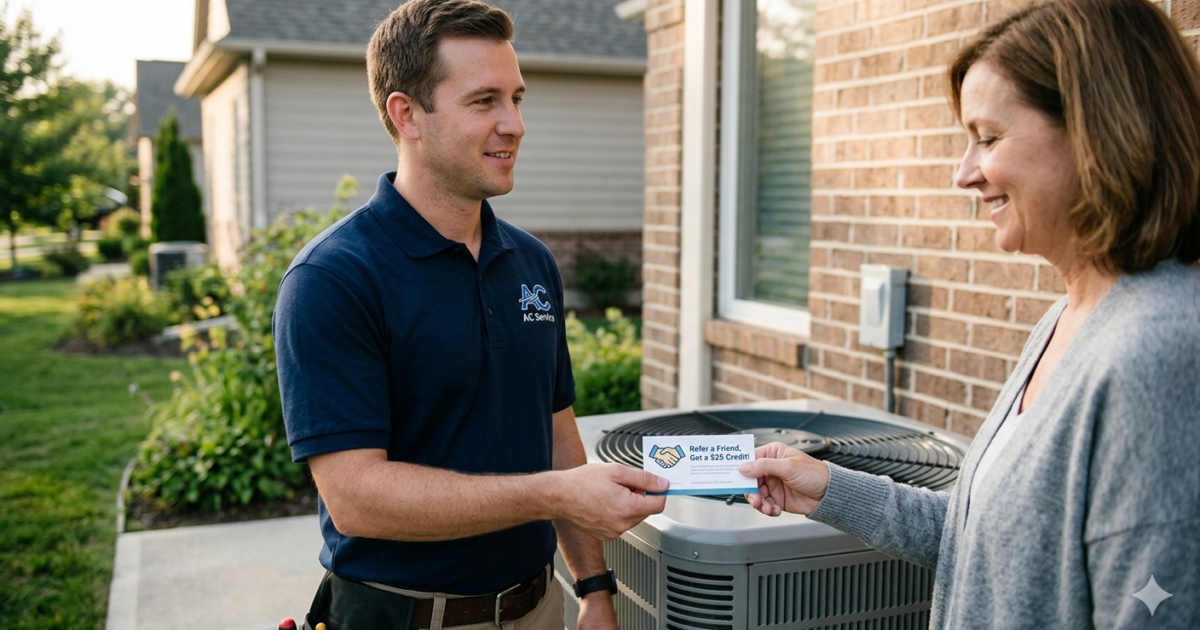
Referral marketing is the most cost-effective customer acquisition channel available to service businesses. Referred customers have a 16% higher lifetime value than other channels and convert at rates 4x higher than paid ads.
Yet most service businesses leave referrals on the table. Why? Manual processes. Asking clients for referrals by hand, tracking who referred whom, and managing reward fulfillment consume time you don’t have. Referral requests get forgotten. Rewards don’t arrive on time. Momentum dies.
Referral program automation solves this. It sends timely referral requests at moments when customers are most satisfied, tracks every referral automatically, and delivers rewards without your intervention. The result: more referrals, higher conversion rates, and revenue growth that doesn’t require a bigger team.
The Cost of Manual Referral Tracking
- Timing gets missed. You forget to ask clients at the right moment—when they’re most satisfied. Days or weeks pass, and the opportunity vanishes.
- Tracking becomes inconsistent. Spreadsheets have errors. Referral sources get mixed up. You can’t reliably attribute new customers to specific referrers.
- Reward fulfillment is delayed. Customers who refer friends expect quick rewards. Manual processing means slow delivery, which discourages future referrals.
- Scaling becomes impossible. As your business grows, managing referrals manually becomes a full-time job.
Studies show that timely referral requests increase participation by 30–50%, yet most service businesses never ask at the optimal moment.
How Referral Program Automation Works
- Trigger-based requests. When a customer completes a job, pays an invoice, or leaves a positive review, an automated message requests a referral.
- Frictionless referral capture. Customers click a link, share contact details of friends, or forward a unique referral code.
- Automatic tracking. The platform logs every referral, tracks which customer referred whom, and monitors conversion status.
- Instant reward delivery. When a referred friend becomes a customer, rewards are issued automatically.
- Real-time reporting. You see referral metrics, conversion rates, and ROI in a dashboard without manual calculation.
Key Benefits of Automated Referral Programs
Increase Referral Conversion Rates
Automation ensures referral requests arrive at the moment of highest customer satisfaction. This timing boost alone increases referral participation by 30–50% compared to manual outreach.
Reduce Operational Friction
No more tracking spreadsheets. No more manual reward processing. Automation handles the administrative work, freeing your team to focus on service delivery.
Scale Without Hiring
As your business grows, a manual referral program requires more staff. Automation scales with you. Whether you serve 50 or 500 customers, the system handles the same workload.
Improve Customer Experience
When rewards arrive instantly and the referral process is seamless, customers feel valued. This strengthens loyalty and encourages repeat referrals.
Measure True ROI
Automation platforms provide detailed analytics: referral sources, conversion rates, customer acquisition cost, and lifetime value. You can calculate exact ROI and optimize your program based on data, not guesswork.
Implementation Steps
Step 1: Define Your Referral Triggers
Choose moments when customers are most satisfied: job completion (24–48 hours after service), invoice payment (customers who pay promptly are engaged), positive review submission, or service anniversary dates.
Step 2: Choose Your Reward Structure
Test different incentives: percentage discounts (10–15% off next service), account credits ($25–$50), free service upgrades, or tiered rewards for multiple successful referrals. Start with one reward type, measure conversion, and adjust based on results.
Step 3: Set Up Your Automation Platform
Choose a platform like nudgey that integrates with your existing tools. Most platforms allow you to create custom referral messages, set up triggers based on customer actions, define reward rules and thresholds, and connect your CRM or invoicing software.
Step 4: Launch and Monitor
Start with one trigger and message. Monitor referral rates, conversion rates, and customer feedback. After 2–4 weeks, analyze results and refine timing, rewards, or messaging.
Real-World Use Cases
- Trades and contractors use job-completed referral SMS to request referrals immediately after finishing a project.
- Service providers leverage invoice-paid referral SMS to request referrals when customers show payment intent.
- Professional services use after-service review referrals to capture referrals from satisfied clients.
- Trade businesses implement referral programs for trades to systematize word-of-mouth growth.
Next Steps: Automate Your Referral Growth
Referral program automation is no longer a luxury—it’s a necessity for service businesses competing for growth. By removing manual friction and timing requests perfectly, you unlock a revenue stream that costs far less than paid advertising and converts at rates 4x higher.
Start small. Pick one trigger, set up one message, and measure results. Most service businesses see referral lift within 30 days of launching automation.
Frequently Asked Questions
How does referral program automation increase conversion rates compared to manual tracking?
Automation ensures referral requests are sent at the exact moment customers are most satisfied. Manual processes miss these critical windows by days or weeks. Studies show timely referral requests increase participation by 30–50%.
What specific triggers should I set up in my referral program automation?
The most effective triggers align with moments of peak customer satisfaction: job completion, invoice payment, positive review submission, and service anniversary dates.
Can referral program automation work for different types of service businesses?
Yes. The core principle remains the same: capture satisfied customers at the right moment and make it effortless for them to refer. Automation platforms allow you to customize triggers, messaging, and rewards to match your specific service business model.
How does automation prevent the revenue loss from manual referral tracking?
Manual processes create three revenue leaks: forgotten referral requests, tracking errors, and delayed rewards. Automation eliminates all three. Trigger-based requests never get forgotten, automated tracking is accurate, and instant reward delivery keeps customers motivated.